



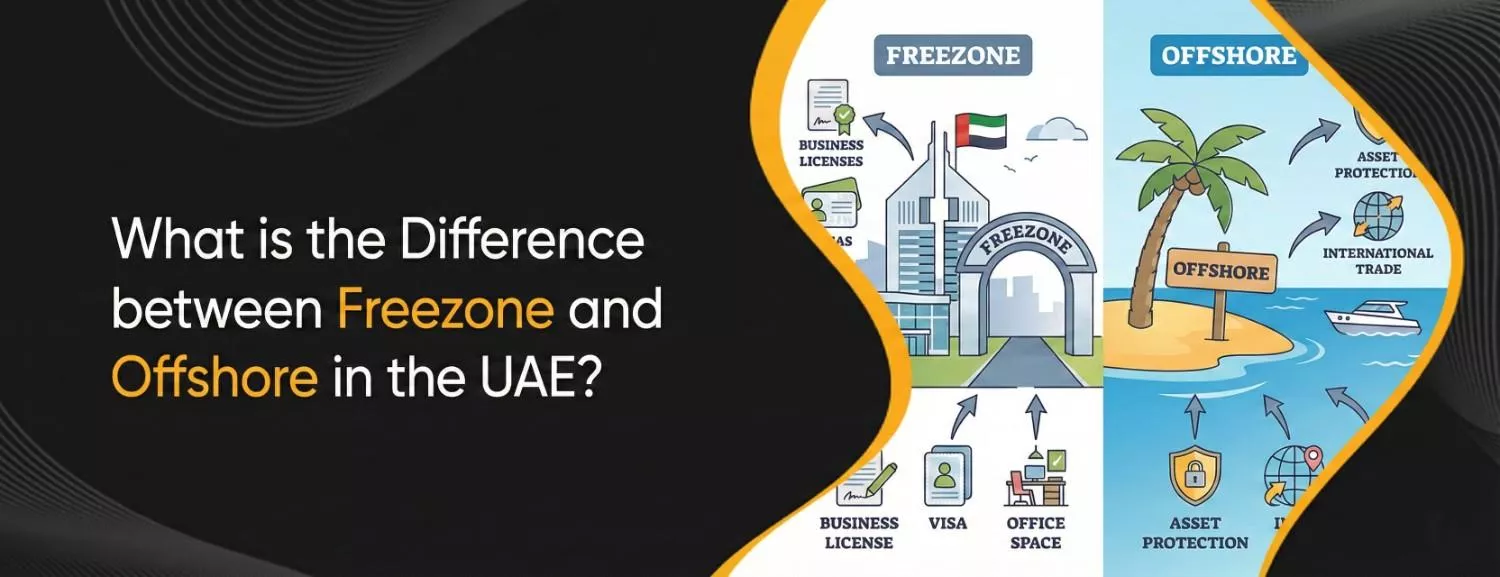
The United Arab Emirates offers several business structures for foreign entrepreneurs, but Freezone and Offshore companies attract the most international interest. Both provide 100 % foreign ownership and attractive tax incentives, yet the wrong choice can restrict your operations, lead to fines, or delay expansion plans.
This guide dives deep into each jurisdiction, combining official sources with expert insights.
Navigating UAE Business Jurisdictions
The UAE has three broad jurisdictions:
- Mainland (onshore) companies: Registered with a Department of Economic Development. Recent reforms allow 100 % foreign ownership in most sectors, but you must operate under UAE regulations and UAE Corporate Tax is 0% on taxable income up to AED 375,000 and 9% on taxable income above AED 375,000
- Free zone companies: Operate under a Free Zone Authority within a geographic area. According to legal guidance, entities formed in a free zone can undertake their licensed activities only within the geographical limits of that free zone.
- Offshore companies: Also registered in special jurisdictions such as RAK ICC, JAFZA Offshore or ADGM. An offshore company is a non‑resident international business company (IBC) designed for cross‑border commerce. It cannot manufacture, trade or provide services in the UAE and doesn’t offer residency visas
Understanding these frameworks allows you to choose the structure that aligns with your products, clients and growth plans.
What Is a Free Zone Company?
A free zone company is a legal entity registered in one of the UAE’s more than 40 free zones. Each zone is administered by its own Free Zone Authority. From a tax perspective, a free zone is a designated area within the UAE specified by Cabinet decision. “Designated Zone” is a VAT concept. Only free zones named by Cabinet Decision get special VAT treatment for certain goods supplies. For Corporate Tax, the key concept is “Qualifying Free Zone Person (QFZP)” and “Qualifying Income,” plus conditions like audited financial statements. Key characteristics include:
- Geographically defined area: A free zone licence is issued by the free zone authority and is primarily intended for activities conducted within the free zone and internationally; doing business directly on the UAE mainland typically requires an approved arrangement or additional licensing.
- 100 % foreign ownership: Free zones allow full foreign ownership, eliminating the need for local partners.
- Tax incentives: Qualifying Free Zone Persons may benefit from a 0 % corporate tax rate on qualifying income. According to the UAE Embassy, businesses in free zones enjoy 100 % import and export tax exemptions, repatriation of capital and profits, and no personal income taxes.
- Types of legal entities: Many zones permit Free Zone Establishments (FZE), Free Zone Companies (FZCO/FZ LLC) and branch offices of foreign or mainland companies.
- Licensing & regulation: Each FZA issues trading, service, industrial or professional licences depending on the zone’s sector (e.g., media, technology, logistics).
- Visa eligibility: Free zone companies can sponsor a limited number of residence visas depending on office size and licence category.
Benefits of Free Zone Companies
- Complete foreign control: 100 % share ownership and freedom to repatriate profits.
- Reduced taxes and duties: Qualifying companies enjoy a 0 % corporate tax rate on qualifying income and are exempt from import/export duties.
- Streamlined setup: Free zones offer simplified documentation and English‑language procedures. Many zones provide digital portals and can incorporate a company within days.
- Sector clusters: Zones such as Dubai Multi Commodities Centre (DMCC) specialise in commodities trading, while Dubai Internet City caters to tech. This clustering provides ecosystem benefits and networking opportunities.
- Visa and housing support: Free zone authorities assist with visas, labour recruitment and sometimes provide affordable office space or business centres.
Limitations of Free Zone Companies
- Restricted market access: Free zone entities cannot conduct business outside the free zone without engaging a local distributor or obtaining the necessary mainland licence.
- Limited activities per licence: Many free zones restrict the type of activities you can perform. For example, a media free zone might not permit manufacturing.
- Visa caps: The number of visas depends on office size and licence; companies requiring many employees may outgrow a free zone.
- Audit and compliance: Some zones mandate annual audits or impose substance requirements to benefit from tax incentives.
How to Set Up a Free Zone Company
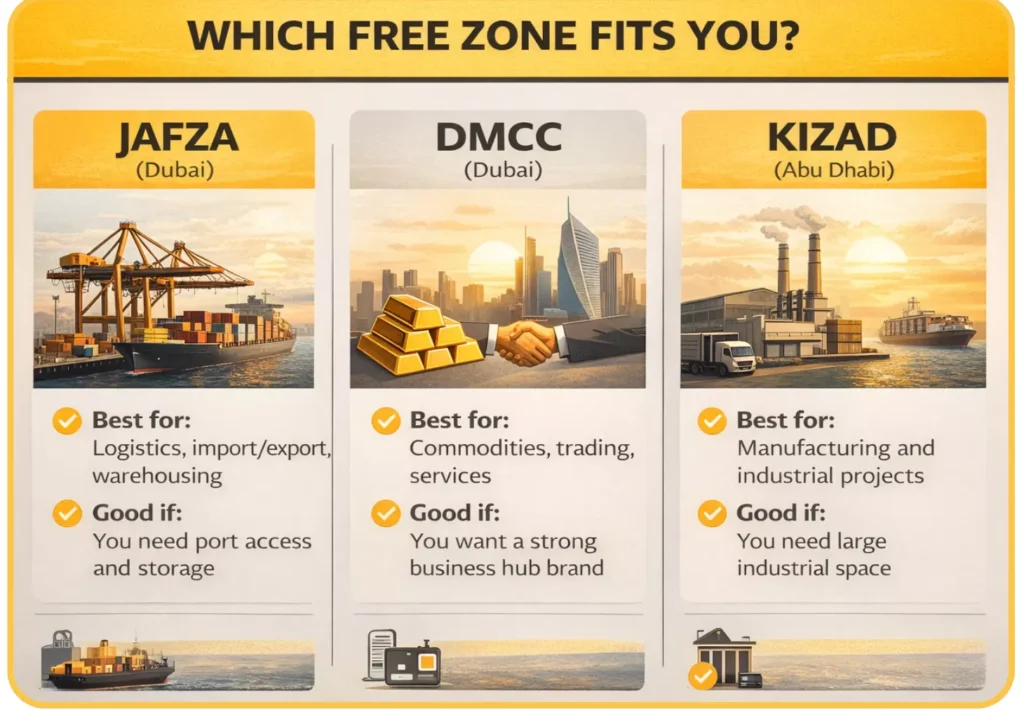
- Choose the right zone and licence: Match your industry and target market. Popular choices include Jebel Ali Free Zone (Jafza) for logistics, DMCC for commodities and Khalifa Industrial Zone (KIZAD) in Abu Dhabi for manufacturing.
- Decide on your legal entity: FZE (single shareholder) or FZ LLC (multiple shareholders) are typical.
- Reserve a trade name: Names must avoid offensive language and certain terms.
- Submit application & KYC documents: Provide passport copies, CVs, business plan and proof of address.
- Choose office/warehouse space: Options range from flexi‑desks to warehouses; the size influences visa quotas.
- Pay licence and registration fees: Fees vary from AED 10,000 to 50,000 depending on zone and activity.
- Open a corporate bank account: Banks will require proof of business activities and may ask for audited statements.
Pro Tip: Many free zones grant licences within 2–5 days if documentation is complete.
What Is an Offshore Company?
An offshore company in the UAE is a non‑resident entity registered in special jurisdictions (RAK ICC, JAFZA Offshore or ADGM) for international business. It cannot manufacture, trade or provide services in the UAE and is used for holding assets, intellectual property or managing investments
Key features:
- Non‑resident IBC: Offshore entities are designed for cross‑border activities and not considered tax residents of the UAE.
- 100 % foreign ownership: Like free zones, offshore companies allow complete foreign ownership.
- No corporate or capital‑gains tax on offshore activity: Offshore income is typically tax‑free
- No office or minimum capital: You don’t need to lease physical premises and there is no minimum share capital requirement
- Mandatory registered agent: You must hire an approved registered agent to incorporate and maintain the company.
- Banking access: Offshore entities can open multi‑currency bank accounts in Dubai or abroad
What Offshore Companies Can and Cannot Do
Permitted:
- Own shares in foreign companies or UAE LLCs
- Hold intellectual property, patents or trademarks.
- Purchase real estate in approved areas (subject to emirate regulations)
- Open bank accounts in the UAE or abroad
- Act as holding or special‑purpose vehicles for cross‑border investment and financing.
Not permitted:
- Sell goods or services within the UAE mainland or free zones
- Hire employees or sponsor UAE residence visas
- Operate manufacturing, trading or service businesses in the UAE
- Serve as a substitute for personal tax compliance: Offshore status does not exempt you from tax obligations in your home country
Benefits of Offshore Companies
- Asset protection and confidentiality: Offshore structures shield assets from potential liabilities and maintain privacy over ownership.
- Cost efficiency: No need for office leases or paid‑up capital; incorporation fees (approx. USD 3 000–8 000) are lower than free zone licences
- Fast setup: Registration with RAK ICC or JAFZA can complete in 2–7 working days
- Flexible international banking: Multi‑currency accounts with no foreign‑exchange controls
- Suitability for holding structures: Ideal for fund managers, family offices and entrepreneurs who need a light‑touch vehicle for cross‑border trade
Limitations of Offshore Companies
- No local operations: Offshore companies cannot trade inside the UAE market or hire local staff
- No visas: They don’t provide residency visas or work permits.
- Compliance duties: Banks require detailed information on ultimate beneficial owners and source of funds
- Not a tax dodge: Offshore status does not excuse you from tax obligations in your home country
Steps to Form an Offshore Company
- Select jurisdiction: Choose between JAFZA Offshore (Dubai), RAK ICC (Ras Al Khaimah) or ADGM SPV/Foundation (Abu Dhabi). Each offers different levels of reputation, cost and governance
- Engage a registered agent: Only authorised agents like Bestax can incorporate offshore companies. They handle name reservation, documentation and liaise with the registrar.
- Prepare KYC documents: Passport copies, proof of address, CVs and source‑of‑funds documents are mandatory
- Name reservation and application: Agents file incorporation forms and reserve a compliant trade name
- Pay registration fees: Fees vary by jurisdiction and package (USD 3 000–8 000).
- Open bank account: Provide certified KYC documents; expect thorough due diligence from banks
Pro Tip: Offshore structures are best for asset holding and cross‑border transactions. If you need visas or plan to trade within the UAE, opt for a free zone or mainland entity
Freezone and Offshore: Side‑by‑Side Comparison
| Factor | Free Zone Company | Offshore Company |
|---|---|---|
| Ownership | 100 % foreign ownership | 100 % foreign ownership |
| Scope of business | Operate within the geographical limits of the free zone; cannot trade directly on the UAE mainland | Cannot trade or provide services in the UAE mainland or free zones |
| Corporate tax | 0 % corporate tax on qualifying income; 9 % rate applies to non‑qualifying income | Not subject to UAE corporate tax on offshore activity |
| Import/export duties | 100 % import/export duty exemptions and full repatriation of profits | Not applicable (cannot import or export within UAE) |
| Office & capital | Must lease office or flexi‑desk; some zones require minimum share capital | No physical office or minimum capital |
| Visas | Can sponsor a limited number of visas depending on office size | Cannot sponsor visas |
| Bank accounts | Eligible to open UAE bank accounts; banks may require audited financials | Can open multi‑currency bank accounts in UAE or abroad |
| Setup time | 2–5 days for most free zones (varies) | 2–7 days via registered agent |
| Best for | Trading, services or manufacturing within a specific sector; companies needing visas and local presence | Holding companies, special‑purpose vehicles, cross‑border trade and asset protection |
Geographic Context: Free Zones & Offshore Destinations
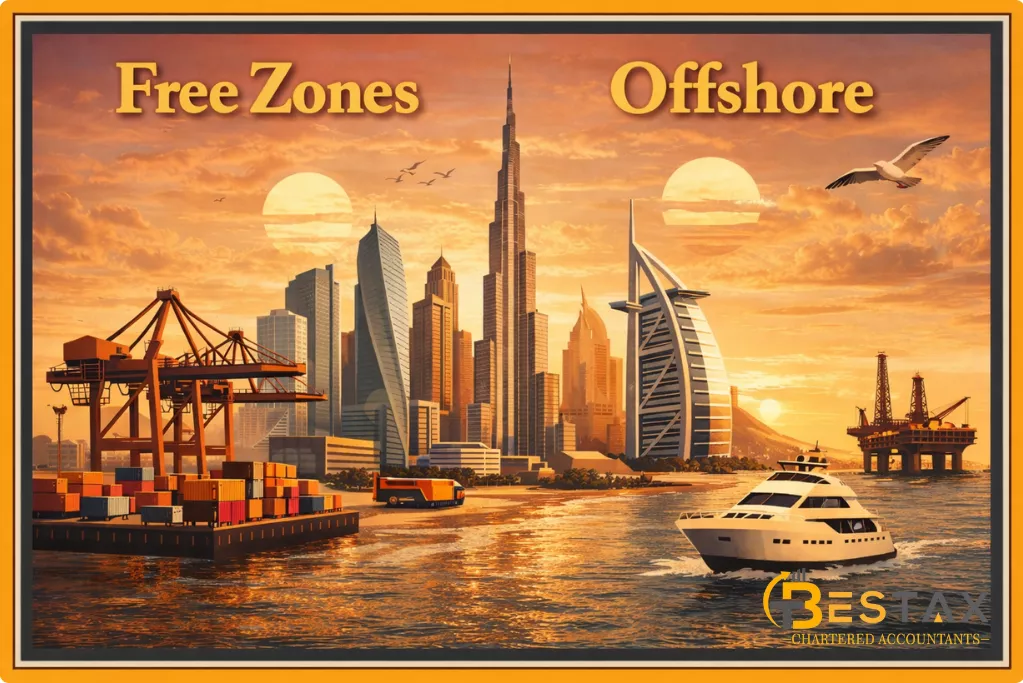
Dubai’s Free Zones
Dubai hosts some of the largest and most diversified free zones. Jebel Ali Free Zone (Jafza) sits along E11 (Sheikh Zayed Road) near the Jebel Ali Port. It’s roughly 35 km southwest of Downtown Dubai and boasts direct access to the Jebel Ali Port and Al Maktoum International Airport. DMCC is located at Jumeirah Lakes Towers, adjacent to the Dubai Marina; it focuses on commodities trade and offers grade‑A office towers. Dubai Airport Free Zone (DAFZ) is situated near Terminal 2 of Dubai International Airport, making it ideal for logistics and high‑value goods.
Abu Dhabi’s Zones
In Abu Dhabi, KIZAD (Khalifa Industrial Zone) and Abu Dhabi Global Market (ADGM) are major players. KIZAD sits near Khalifa Port along the E11 highway, roughly 60 km from Abu Dhabi city centre. It offers large industrial plots and proximity to the deep‑water port. ADGM is located on Al Maryah Island, a financial district with English common law courts.
Northern Emirates & Offshore Havens
- Ras Al Khaimah Economic Zone (RAKEZ) lies in the emirate of Ras Al Khaimah, about 100 km northeast of Dubai via E311/E611 highways. It combines industrial and commercial zones and is close to RAK International Airport.
- RAK ICC (Ras Al Khaimah International Corporate Centre), the offshore registry, is also in Ras Al Khaimah. The area is known for lower setup costs and swift registrations
- JAFZA Offshore operates within the Jebel Ali Free Zone in Dubai, offering brand recognition and strong banking relationships
- ADGM SPV/Foundations on Al Maryah Island serve as high‑governance offshore vehicles under English common law
Best Times to Visit and Incorporate
The UAE has a desert climate with hot summers and mild winters. To combine incorporation with business‑development trips:
- October to April: Pleasant temperatures (20 to 30 °C), ideal for site visits, free zone tours and networking events.
- May to September: High heat (35 to 45 °C) and humidity can make travel uncomfortable; however, authorities continue to process applications. Ramadan (dates vary) may reduce working hours, so plan accordingly.
Travel Tip: When visiting zones like Jafza or RAKEZ, pre‑book your meetings and carry original documents. The UAE federal government weekend is Saturday-Sunday (with specified Friday hours for federal entities).
Pro Tips for Choosing Between Freezone and Offshore
- Define your clients: If your customers are based in the UAE or you need to deliver services locally, choose a free zone or mainland entity. Offshore vehicles are for cross‑border trade and holding structures.
- Assess tax exposure: Free zone companies must maintain substance and audited accounts to enjoy the 0 % tax rate. Offshore companies avoid UAE tax on offshore income but may face tax obligations in your home country
- Consider visas and staffing: Free zone licences allow visas but have quota limits; offshore companies do not issue visas
- Plan your exit: Some entrepreneurs start with a free zone entity for quick market entry and later restructure into offshore or mainland as operations grow.
- Use professionals: Engage reputable business setup consultants like Bestax and registered agents. They navigate regulatory nuances and banking requirements, saving time and avoiding compliance pitfalls.
Whether you need a trading licence, holding company or multi‑jurisdiction structure, get a detailed quote covering setup costs, bank account assistance and compliance support.
Quick FAQs
Can a free zone company do business on the UAE mainland?
No. Entities formed in a free zone can conduct their activities only within the geographical limits of that free zone. To trade on the mainland, you must appoint a local distributor or obtain a mainland licence.
Does a free zone company pay corporate tax?
Free zone companies can benefit from a 0 % corporate tax on qualifying income. Non‑qualifying income is taxed at the standard rate of 9 %.
Can an offshore company open a bank account in the UAE?
Yes. Offshore companies may open multi‑currency bank accounts in Dubai or abroad Banks will require detailed KYC and may ask for proof of business activities
Will an offshore company grant me a UAE residence visa?
No. Offshore companies do not provide visas If you need visas for yourself or employees, consider a free zone or mainland licence.
Which is cheaper to set up: free zone or offshore?
Offshore companies generally have lower incorporation fees and no office rental costs. Typical setups cost USD 3 000 to 8 000 Free zone companies require office leases and annual licence fees, ranging from AED 10 000 upward.
Can an offshore company own property in the UAE?
In some emirates (e.g., Dubai), offshore companies can own property in designated freehold areas with approval Always check current regulations.
Disclaimer: The information provided in this blog is for general informational purposes only. For professional assistance and advice, please contact experts.
